Propellerads
Showing posts with label Civil Engineering. Show all posts

Nadim Hassoun Structural Concrete pdf free download


Structural Concrete 

by Nadim Hassoun and Akhtem Al-Manaseer


DOWNLOAD FREE BOOK

Nadim Hassoun Structural Concrete pdf free download


The design of different structures is achieved by performing, in general, two main steps:


(1) Determining the different forces acting on the structure using proper methods of structural analysis.

(2) proportioning all structural members economically, considering the safety, stability, serviceability, and functionality of the structure.

Structural concrete is one of the materials commonly used to design all types of buildings. Its two component materials, concrete and steel, work together to form structural members that can resist many types of loadings. The key to its performance lies in strengths that are complementary; Concrete resists compression and steel reinforcement resists tension forces.

The term structural concrete indicates all types of concrete and in structural applications. Structural concrete may be plain, prestressed, or partially prestressed concrete; in addition, concrete is used in composite design. Composite design is used for any structural member, such as beams or columns, when the member contains a combination of concrete and steel shapes.

In this post I am going to share with you a very useful book for design engineers it will act like a handbook for structural engineers to design any structure including beams, one-way and two-way slabs, columns, stair cases etc.


Contents of the Book


Introduction
Properties of Reinforced Concrete
Flexural Analysis of Reinforced Concrete Beams
Flexural Design of Reinforced Concrete Beams
Alternative Design Methods
Deflection and Control of Cracking
Development Length of Reinforcing Bars
Shear and Diagonal Tension
One-Way Slabs
Axially Loaded Columns
Members in Compression and Bending
Slender Columns
Footings
Retaining Walls
Design for Torsion
Continuous Beams and Frames
Design of Two-way Slabs
Stairs
Introduction to Prestressed Concrete
Seismic Design of Reinforced Concrete Structures
Beams Curved in Plan
Appendix A
Appendix B
Appendix C


Keywords for this Book

structural concrete,theory and design books, Download book theory and design ebook design reinforced concrete book's, download book structural concrete theory-and-design reinforced concrete design theory reinforced concrete design


Structural Concrete: Theory and Design


The popular, easily accessible guide to the design of reinforced concrete structures—now updated and revised

Structural Concrete, Fifth Edition provides complete guidance to the analysis and design of reinforced and prestressed concrete structures. This new edition brings all material up to date while maintaining the book's practical, logical, easy-to-follow approach. Coverage includes the latest ACI 318 - 11 code rules, emphasizing the code's strength approach and strain limits. Additional codes, standards, and specifications, as well as material properties and specific loads and safety provisions are also examined in detail.

Drawing on decades of experience in industry and academia, the authors include numerous SI unit examples and design tables along with step-by-step instructions on how to analyze and design for each type of structural member. They clearly explain all key concepts one should know before tackling design formulas, and supplement the discussion with helpful end-of-chapter summaries, references, and problems. New and updated material in this edition includes:

The application of shear design to beams with variable length in actual structure

The design of deep beams employing ACI and AASHTO strut-and-tie approach

The design of stepped-type reinforced concrete stairs, not covered anywhere else

Seismic design and analysis utilizing the IBC 2012 and ASCE 7-10 code

The design of curved beams subject to flexure, shear, and torsion

Prestressed concrete bridge design according to AASHTO specifications

Examples for predicting shrinkage and creep of concrete in both U.S. and SI units

Structural Concrete, Fifth Edition arms civil and structural engineers with a complete set of tools for designing concrete structures with confidence. It is also an excellent resource for students of civil engineering.

Steel Buildings

Steel Buildings

With today's basic steel surrounding, beauty, workmanship and capacity can meet up in practically boundless ways; steel development offers new arrangements and openings, enabling draftsmen to extend their creative energy and really make probably the most difficult structures they have composed in their psyches. What was oncethought outlandish is currently a reality.

DOWNLOAD HERE

 Link-1           LINK-2              Mirror Link        Direct Link


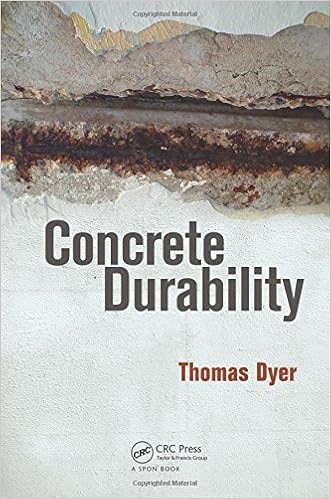
Concrete Durability


Concrete Durability


Solidness

Physical systems of solid debasement

Synthetic components of solid debasement

Consumption of steel support in cement

Detail and outline of solid cement

Development of sturdy solid structures

Serviceability, repair and upkeep of solid structures


DOWNLOAD HERE

LINK-1    LINK-2   Mirror Link     Direct Link

The expanding significance set all in all life execution of struc-

tures implies that there is a developing interest for long administration lives with

negligible support necessities. Besides, the operation of infra-

structure past the initially expected administration life is turning into an increas-

ingly basic situation. In this manner, the solidness of development materials is of

more worry to structural specialists than any time in recent memory.


DOWNLOAD HERE

LINK-1    LINK-2   Mirror Link     Direct Link

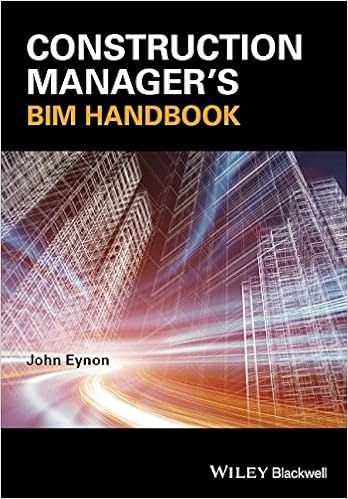
Construction Manager’s BIM Handbook


Construction Manager’s BIM Handbook


Content:

What is BIM?
Why BIM?
BIM, Buildings and Infrastructure
BIM and Infrastructure
Collaboration
Collaborative Working
Leadership Choices
BSI B555 Roadmap
UK BIM Level 2: Key Documents
NBS BIM Toolkit: An Overview
BIM-ing the Team

DOWNLOAD HERE
LINK-1     LINK - 2       Mirror Link             Direct Link
BIM Level 2: Legal Perspective
5D BIM: Cost
BIM and Facilities Management
Cyber Security
Level 2, Level 3 and Beyond
The Next Construction Revolution
BIM and the Future of Design Management
BIM and Social Media
BIM Leaders of the Future: Engaging the Digital Generation
Getting Started – BIM Implementation and SMEs

DOWNLOAD HERE

LINK-1     LINK - 2       Mirror Link             Direct Link


ANALYSIS OF ENGINEERING STRUCTURES

ANALYSIS OF ENGINEERING STRUCTURES

This book gives a central and careful scope of statics for understudies of

auxiliary designing. The strategies for basic examinations are clarified in detail, based

on fundamental static, kinematic and vitality strategies.

An entire part manages figurings identifying with the distortion of structures, as the

creators trust that it is a reason for accomplishing a decent comprehension of auxiliary

conduct.
DOWNLOAD HERE
Link -1                  link-2          mirror link           Direct Link

Much consideration is paid to the handy parts of the subject and each bit of hypothetical

investigation is trailed by worked cases and in determination a straightforward extension is dissected by

the different techniques that have been introduced.

The limited component technique, as an expansion of the dislodging strategy, is secured just to

give a comprehension of PC applications exhibited utilizing the basic investigation

program OCEAN, which can be downloaded from the web (kamen.unimb.

si/lak/sea).

An inventive approach that empowers impact lines to be figured (utilizing ^-capacities
'8
created by Bedenik) in significantly less complex way than any beforehand known technique is too

portrayed.

Essential lattice polynomial math is given in addendums to give perusers the important instruments to

comprehend the content.

DOWNLOAD HERE
Link -1                  link-2          mirror link           Direct Link

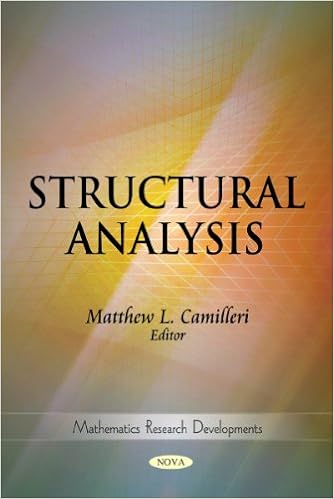
STRUCTURAL ANALYSIS-MATTHEW L. CAMILLERI


 STRUCTURAL ANALYSIS

MATTHEW L. CAMILLERI


Basic investigation includes the arrangement of physical laws and arithmetic

required to think about and foresee the conduct of structures. This new book assembles

furthermore, presents flow look into in the field of auxiliary examination over an expansive

range of themes. Talks in this gathering include: assessing seismic

security utilizing non-straight basic examination; a basic investigation of how craftsmanship is

made; the structure and capacity of vegetal biological communities in semiarid districts of

Northeastern Mexico; utilizing a covariance auxiliary examination as a strategy for

supporting endeavors to enhance representative inspiration; and a strategy for tackling

direct mathematical condition sets in FE examination programming.


DOWNLOAD HERE

PDF File Free          LINK - 1            LINK-2            MIRROR Link


The concentration of Chapter 1 is " How is it that specialists know how to make their

work but don't know how to clarify it?" as it were, the manner by which do they both

world require an obligatory past assessment of the regular assets from the

contemplate territories. In Chapter 2, the primary approach is headed to the structure and

working of the vegetal biological communities which personally includes different

interrelated components, for example, vegetation, dairy cattle, and other fauna, taking additionally into

account administration and commercialization of wooden and non wooden

items.

An awesome piece of the Mexican republic is situated on the planet betray belt with

around 20 million hectares, 18 million situated in the upper east of the

nation, mostly secured by xerophytic bush vegetation (Rzedowski, 1978,

Palacios, 2000). There is no confirmation to date about the source of the distinctive

sorts of bush populaces developing as characteristic peak vegetation

DOWNLOAD HERE


Civil Engineering Hand Book

Civil Engineering Hand Book


This is a unique book. I say about this book that it Roles on mind of Civil Engineers since a long time and a evergreen best seller book.

I Scan a copy Please click on Download to collect in Your PC,


it is Free PDF format.


Thanks to All

for more books 

Like my Blog     CLICK HERE

send feed back at: str4civil@gmail.com

Engineering Economic Analysis 12th Edition


Engineering Economic Analysis 12th Edition
by Donald G. Newnan (Author), Jerome P. Lavelle  (Author), Ted G. Eschenbach (Author)


The twelfth edition of the market-leading Engineering Economic Analysis offers comprehensive coverage of financial and economic decision making for engineers, with an emphasis on problem solving, life-cycle costs, and the time value of money. The authors' concise, accessible writing, practical emphasis, and contemporary examples linked to students' everyday lives make this text the most popular among students.

DOWNLOAD LINKS
LINK - 1            LINK-2

DIRECT LINK


New to the Twelfth Edition


* 500 new or revised problems--answers to most even problems now in Appendix E
* Six new and nine updated chapter-opening vignettes provide extended real-world examples
* Twenty new Excel tutorial videos added to the updated set of thirty-six from the eleventh edition
* New visual "five-button solutions" help simplify the use of spreadsheets and calculators
* A new Appendix 12A aggregates coverage of personal income taxes, which now includes time


value of money problems.The twelfth edition of the market-leading Engineering Economic Analysis offers comprehensive coverage of financial and economic decision making for engineers, with an emphasis on problem solving, life-cycle costs, and the time value of money. The authors' concise, accessible writing, practical emphasis, and contemporary examples linked to students' everyday lives make this text the most popular among students. In addition, with its extensive support package and logical progression of topics, this is the easiest book to teach from.


DOWNLOAD LINKS
LINK - 1            LINK-2

DIRECT LINK


SPONSOR LINKS
download free      click here   sponsor link    pdf book    link

free books     civil engineer books     civil jobs 
sponsor links
SPONSOR LINKS
download free      click here   sponsor link    pdf book    link


ETABS Example Design of RC Building with Shear Wall

ETABS Example Design of RC Building with Shear Wall


Static, Dynamic Analysis
and
Design of RC Building with Shear Wall
(5 Story Building, US Units)
Step-by-Step Solution
Part A: Modeling, Static Analysis and Design
Part B: Dynamic Analysis and Design
Part C: Design of Shear Wall


DOWNLOAD LINKS
LINK - 1            LINK-2

DIRECT LINK


SPONSOR LINKS
download free      click here   sponsor link    pdf book    link

free books     civil engineer books     civil jobs 
sponsor links
SPONSOR LINKS
download free      click here   sponsor link    pdf book    link


Calculate Quantities of Materials for Concrete

Calculate Quantities of Materials for Concrete


Quantities of materials for the production of required quantity of concrete of given mix proportions can be calculated by absolute volume method.This method is based on the principle that the volume of fully compacted concrete is equal to the absolute volume of all the materials of concrete, i.e. cement, sand, coarse aggregates and water.


DOWNLOAD LINKS
LINK - 1            LINK-2

DIRECT LINK


SPONSOR LINKS
download free      click here   sponsor link    pdf book    link

free books     civil engineer books     civil jobs 
sponsor links
SPONSOR LINKS
download free      click here   sponsor link    pdf book    link


AASHTO Maintenance Manual for Roadways and Bridges 2007


AASHTO Maintenance Manual for Roadways and Bridges 2007


ASHTO Maintenance Manual is based on information gleaned from recent highway transportation literature on maintenance, and field visits and interviews conducted by Kenneth A. Brewer as the principal author under National Cooperative Highway Research Program (NCHRP) Project SP20-07, Task 170. This document was prepared under the guidance of the NCHRP SP20-07, Task 170.Intended for persons early in their career in roadway and bridge maintenance, the Maintenance Manual for Roadways and Bridges will assist them in understanding the various processes, methods, and materials that are applied to maintain the bridge and highway system effectively. Also intended to be a dynamic document, the manual will need to be updated as research and applications change the relevant content sections. Historically, highway maintenance has encompassed personnel man-agement, materials selection, equipment use, and application of methods to react to problems in

DOWNLOAD LINKS

LINK - 1            LINK-2

DIRECT LINK
bridges and roadways, budgeting, and planning. The field is now evolving into a new engineering science of its own, resulting from a synergistic combination of traditional civil engineering, industrial engineering, business management, materials science, industrial psychology, and environmental sci-ence. This manual is envisioned as the first step in documenting that transition; this first-generation text will lead and guide the professional development of the engineering managers of roadway and bridge maintenance in the beginning of the 21st centur


DOWNLOAD LINKS

LINK - 1            LINK-2

DIRECT LINK


SPONSOR LINKS
download free      click here   sponsor link    pdf book    link

free books     civil engineer books     civil jobs 
sponsor links
SPONSOR LINKS
download free      click here   sponsor link    pdf book    link


Construction Management Fundamentals


Construction Management Fundamentals (McGraw-Hill Series in Civil Engineering) 2nd Edition

by Kraig Knutson (Author),
Clifford J. Schexnayder (Author),
Christine Fiori (Author), Richard Mayo (Author)


"Construction Management Fundamentals is intended as an introduction to both technical and business sides of construction, and is intended for use in an undergraduate Civil Engineering

curriculum or for graduate courses in Construction Management. The text covers fundamentals of construction in a logical, simple, and concise format, and many examples reinforce construction and management concepts through applications, photographs, and illustrations derived from actual

DOWNLOAD LINKS
LINK - 1            LINK-2

DIRECT LINK


SPONSOR LINKS
download free      click here   sponsor link    pdf book    link

free books     civil engineer books     civil jobs 
sponsor links
SPONSOR LINKS
download free      click here   sponsor link    pdf book    link


projects. Based upon professional practice, standard formats for analyzing common problems are presented and explained preparing students for fast-paced bid preparation. The second edition of Construction Management Fundamentals includes coverage of the Construction Specifications


 Institute’s new MasterFormat 2004 edition, as well as a completely rewritten safety chapter incorporating the latest OSHA required safety practices and reporting practices. The book will help

prepare the student who may take one or two courses in construction or the construction management professional."

Building Materials in Civil Engineering

Building Materials in Civil Engineering


Dealing with properties, applications and experimental analysis of important materials of construction/civil engineering, this work covers issues of how materials are made or obtained, their physical and mechanical properties, how they are tested in the lab, and their strength characteristics.


This book is suitable for students majoring in “Civil Engineering”,


“Construction Engineering”, “Engineering Supervision”, “Costing

Engineering”, and “Water Supply and Drainage Engineering”, also for the

engineers and technicians engaging in the relevant specialties.

For the sake of requirements for higher vocational and professional

DOWNLOAD

teaching and vocational education, this book not only focuses on cement,


Construction Management Fundamentals (McGraw-Hill Series in Civil Engineering) 2nd Edition

by Kraig Knutson (Author), Clifford J. Schexnayder (Author), Christine Fiori (Author), Richard Mayo (Author)


concrete, steel, new waterproof materials, but also introduces the

environment-friendly materials. It tries to make the teaching materials more

applicable, more substantial, more succinct, and more novel.


DOWNLOAD LINKS

LINK - 1            LINK-2

DIRECT LINK


SPONSOR LINKS
;2download free      click here   sponsor link    pdf book    link

free books     civil engineer books     civil jobs 
sponsor links
SPONSOR LINKS
download free      click here   sponsor link    pdf book    link

free books     civil engineer books     civil jobs 

LRFD Steel Design Example Problems

LRFD Steel Design Example Problems


Steel Structures Design: ASD/LRFD introduces the theoretical background and fundamental basis of steel design and covers the detailed design of members and their connections. This in-depth resource provides clear interpretations of the American Institute of Steel Construction (AISC) Specification for Structural Steel Buildings

Steel design, or more specifically, structural steel design, is an area of knowledge of structural engineering used to design steel structures. The structures can range from schools to homes to bridges.

DOWNLOAD

In structural engineering, a structure is a body or combination of pieces of rigid bodies in space to form a fitness system for supporting loads. Structures such as buildings, bridges, aircraft and ships are all examples under steel structure

LINK - 1            LINK-2

DIRECT LINK


SPONSOR LINKS
download free      click here   sponsor link    pdf book    link

free books     civil engineer books     civil jobs 
sponsor links
SPONSOR LINKS
download free      click here   sponsor link    pdf book    link

free books     civil engineer books     civil jobs 


Preparing for Project Management free PDF


Preparing for Project Management


David J. Williams

DOWNLOAD FREE PDF BOOKS


This book is intended for the recently chosen extend administrator, experienced venture supervisors, and those intrigued by getting to be plainly one. This guide urges extend directors to manufacture a premise of comprehension with staff, best administration, and proprietors as they accept the obligations of administration and initiative. The two essential subjects of this guide are quality and profitability, which are both finished through great arranging. Sections include: Total Quality Management (TQM); Marketing; Project Quality, Planning, Control, and Completion; and Managing Projects for Profit. There is likewise an accommodating Appendix that gives exhortation on basic leadership, proficient morals and decorum, and managing the media.


Propellerads


Preparing for Project Management: A Guide for the New Architectural or Engineering Project Manager in Private Practice

Reinforced Concrete: Mechanics and Design (6th Edition) by James K. Wight, James G. MacGregor

Reinforced Concrete: Mechanics and Design (6th Edition) 6th Edition

by James K. Wight, James G. MacGregor 

ISBN-13: 978-0132176521
ISBN-10: 0132176521

Hardcover: 1176 pages
Publisher: Prentice Hall; 6 edition (September 11, 2011)
SEND YOUR MONEY TO HOME AND EARN 25$ .........CLICK HERE.

Reinforced Concrete: Mechanics and Design, 6/e 

is an impeccable content for experts in the field who require a thorough reference on solid structures and the plan of strengthened cement. Strengthened solid outline envelops both the craftsmanship and study of designing. This book introduces the hypothesis of fortified concrete as an immediate utilization of the laws of statics and mechanics of materials. What's more, it underscores that an effective plan fulfills configuration rules, as well as is equipped for being inherent an opportune form and for a sensible cost. A multi-layered approach makes Reinforced Concrete: Mechanics and Design an extraordinary reading material for an assortment of college courses on strengthened solid outline. Subjects are regularly presented at a key level, and after that move to larger amounts where earlier instructive experience and the improvement of designing judgment will be required.

REQUEST FOR DOWNLOAD FREE PDF


About the Author


James K. Wight received his B.S. and M.S. degrees in civil engineering from Michigan State
 University in 1969 and 1970

, respectively, and his Ph.D. from the University of Illinois in 1973. He has been a professor of structural engineering in the Civil and Environmental Engineering Department at the University of Michigan since 1973. He teaches undergraduate and graduate classes on analysis and design of reinforced concrete structures. He is well known for his work in earthquake-resistant design of concrete structures and spent a one-year sabbatical leave in Japan where he was involved in the construction and simulated earthquake testing of a full-scale reinforced concrete building. Professor Wight has been an active member of the American Concrete Institute (ACI) since 1973 and was named a Fellow of the Institute in 1984. He is currently the Senior Vice President of ACI and the immediate past Chair of the ACI Building Code Committee 318. He is also past Chair of the ACI Technical Activities Committee and Committee 352 on Joints and Connections in Concrete Structures. He has received several awards from the American Concrete Institute including the Delmar Bloem Distinguished Service Award (1991), the Joe Kelly Award (1999), the Boise Award (2002), the C.P. Siess Structural Research Award (2003 and 2009), and the Alfred Lindau Award (2008). Professor Wight has received numerous awards for his teaching and service at the University of Michigan including the ASCE Student Chapter Teacher of the Year Award, the College of Engineering Distinguished Service Award, the College of Engineering Teaching Excellence Award, the Chi Epsilon-Great Lakes District Excellence in Teaching Award, and the Rackham Distinguished Graduate Mentoring Award. He has received Distinguished Alumnus Awards from the Civil and Environmental Engineering Departments of the University of Illinois (2008) and Michigan State University (2009).

SEND YOUR MONEY TO HOME AND EARN 25$ .........CLICK HERE.

James G. MacGregor, University Professor of Civil Engineering at the University of Alberta, Canada,

 retired in 1993 after 33 years of teaching, research, and service, including three years as Chair of the Department of Civil Engineering. He has a B.Sc. from the University of Alberta and a M.S. and Ph.D. from the University of Illinois. In 1998 and 1999 he received a Doctor of Engineering (Hon) from Lakehead University, and in 1999 a Doctor of Science (Hon) from the University of Alberta. Dr. MacGregor is a Fellow of the Academy of Science of the Royal Society of Canada and a Fellow of the Canadian Academy of Engineering. A Past President and Honorary Member of the American Concrete Institute, Dr. MacGregor has been an active member of ACI since 1958. He has served on ACI technical committees including the ACI Building Code Committee and its subcommittees on flexure, shear, and stability and the ACI Technical Activities Committee. This involvement and his research has been recognized by honors jointly awarded to MacGregor, his colleagues, and students. These included the ACI Wason Medal for the Most Meritorious Paper (1972, and 1999), the ACI Raymond C. Reese Medal, and the ACI Structural Research Award (1972 and 1999). His work on the developing the Strut-and-Tie model for the ACI Code was recognized by the ACI Structural Research Award (2004). In addition, he has received several ASCE Awards, including the prestigious ASCE Norman Medal with three colleagues (1983). Dr. MacGregor chaired the Canadian Committee on Reinforced Concrete Design from 1977 through 1989, moving on to chair the Standing Committee on Structural Design for the National Building Code of Canada from 1990 through 1995. From 1973 to 1976 he was a member of the Council of the Association of Professional Engineers, Geologists, and Geophysicists of Alberta. At the time of his retirement from the University of Alberta, Professor MacGregor was a principal in MKM Engineering Consultants. His last project with that firm was the derivation of site-specific load and resistance factors for an eight-mile long concrete bridge.

SEND YOUR MONEY TO HOME AND EARN 25$ .........CLICK HERE.

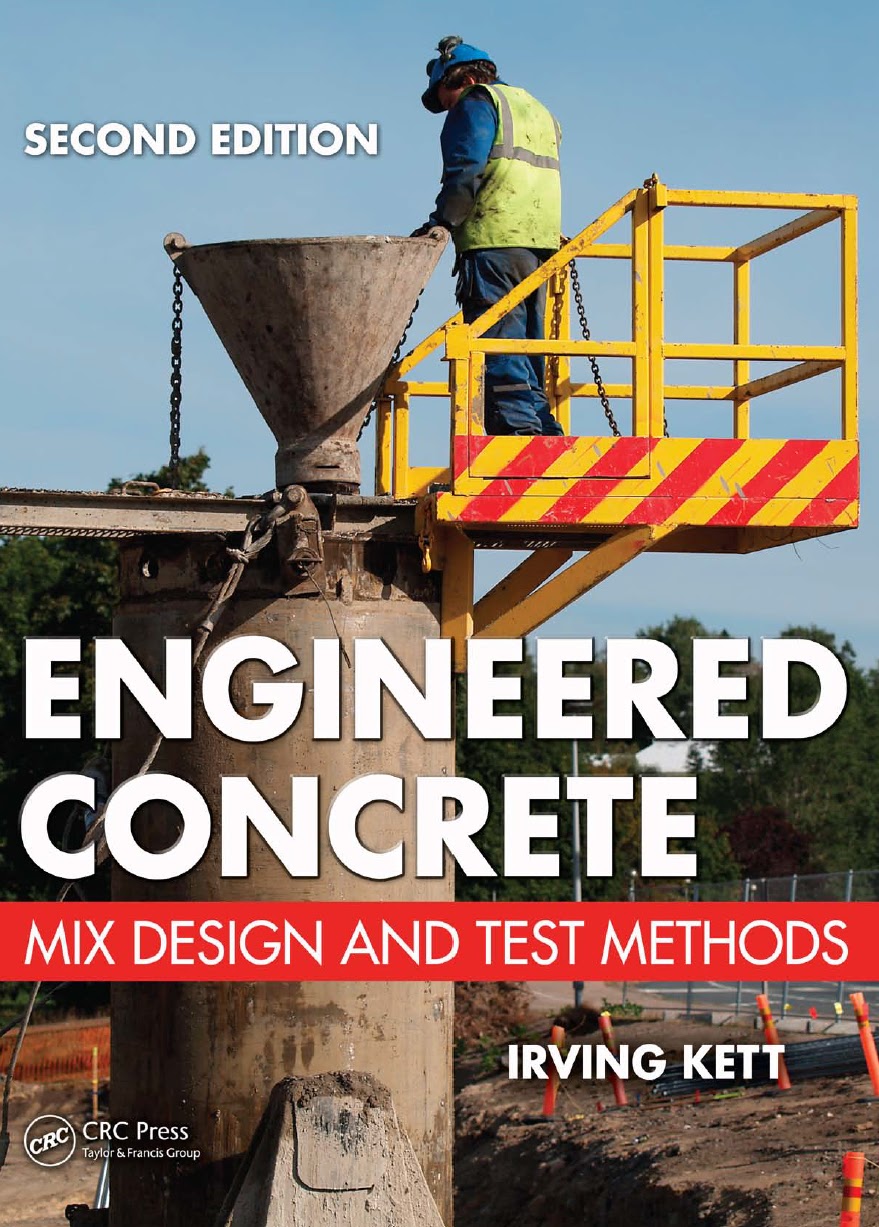
Engineered Concrete: Mix Design and Test Methods, Second Edition 2nd Edition by Irving Kett


Engineered Concrete: Mix Design and Test Methods, Second Edition 2nd Edition

by Irving Kett

As each affable architect knows, Portland Cement is the most flexible and critical material of development, and will likely remain so far into what's to come. However few books, assuming any, exist that offer an inside and out examination of the blending and testing strategies for this imperative water driven bond. This announcement, expounded on the primary release of Engineered Concrete: Mix Design and Test Methods, stays as genuine today as it was ten years back. Reexamined and refreshed, the second release of this momentous asset totally covers Portland Cement, Portland Cement Concrete, and their employments.

SEND YOUR MONEY TO HOME AND EARN 25$ .........CLICK HERE.

See what's new in the Second Edition:

New scope of the most recent solid advancements, for example, superior and lightweight cement

A few new tests and test tearsheets

Extra and refreshed information sheets

The body of the book is isolated into a few areas, with the principal clarifying how concrete groups are outlined, blended, and measured for different textures. Another area points of interest the trial of the essential segment materials of cement other than water―namely Portland Cement, totals, and mortar―while the last segment incorporates a portion of the principal solid testing methodology for various quality parameters in similarity with the norms of the American Society for Testing Materials. Determinedly explored and composed, the book supplies a central comprehension of bond, cement, and blending and testing strategies that enable perusers to deliver the most practical mixes of solid materials and fulfill execution necessities and details.

REQUEST FOR DOWNLOAD FREE PDF


Table Of Contents
Introduction Introduction Brief Overview of Portland Cement and Concrete Technology
Mix Design Procedures Tests for Aggregates,
Portland Cement, and
Mortar Rodded Unit Weight of Coarse Aggregates (C 29)
Compressive Strength of Hydraulic Cement Mortars (C 109)
Specific Gravity and Absorption Tests of Coarse and Fine Aggregates for Use in the Design of Portland Cement Concrete Mixtures (C 127/128)
Resistance to Degradation of Small-Sized Coarse Aggregates by Abrasion and Impact in the Los Angeles Machine (C 131)
Dry Sieve Analysis of Fine and Coarse Aggregates (C l36)
Material Finer than 75 mum (No. 200 Sieve) by Washing (C 117)
 Clay Lumps and Friable Particles in Aggregates (C 142) Density of Hydraulic Cement (C 188) Tensile Strength of Hydraulic Cement Mortars (C 190) Time of Set of Hydraulic Cement by Vicat Needle (C 191) Fineness of Portland Cement by Air Permeability Apparatus (C 204) Sand Equivalent Value of Soils and Fine Aggregates (D 2419) Index of Aggregate Particle Shape and Texture (D 3398) Flat or Elongated Particles in Coarse Aggregate (D 4791) Standard Specifications for Wire Cloth and Sieves for Testing Purposes (E 11) Tests for Portland Cement Concrete Compressive Strength of Cylindrical Concrete Specimens (C 39) Flexural Strength of Concrete Using Simple Beam with Third-Point Loading (C 78) Unit Weight, Yield, and Air Content of Concrete (C 138) Slump of Hydraulic Cement Concrete (C 143) Air Content of Freshly Mixed Concrete by the Volumetric Method (C 173) Making and Curing Concrete Test Specimens in the Laboratory (C 192) Air Content of Freshly Mixed Concrete by the Pressure Method (C 231) Bond Strength of Concrete Developed with Reinforcing Steel (C 234) Ball Penetration in Freshly Mixed Concrete (C 360) Static Modulus of Elasticity and Poisson's Ratio of Concrete in Compression (C 469) Splitting Tensile Strength of Cylindrical Concrete Specimens (C 496) Rebound Number of Hardened Concrete (C 805) Direct Tensile Test of Portland Cement Concrete Appendices A: Measurement Conversion Factors between the S.I. System and the U.S. Standard Units B: Laboratory Rules of Safety and Procedures C: Tables of Portland Cement Specifications from ASTM Designation: C 150 D: Concrete Admixtures and Other Cementitious Materials E: Development of ASTM Standards F: Sample Course Outlines for 10-Week and 15-Week Laboratory Sessions G: New Developments in Portland Cement Concrete (PCC) Technology H: Bibliography Additional Copies of Laboratory Data Sheets Index